One Planet Living for humanity, forever
Cleantech Oxfordshire
  • Home
  • About
  • Blog
  • Contact
  • Nutshell
  • Green Fun
  • Music
  • Links

Units of measure for the World Balance Sheet

21/10/2015

0 Comments

 
Some people are worried that if we construct a world balance sheet in an existing currency such as GB Pounds or US Dollars, then it would make businesses and governments more aware of the assets that can be exploited unsustainably for profit and for votes.

In response to that, the Planetary CFO is likely to want to evaluate many different units of measure for the balance sheet.  We choose a unit of measure that means something to us.  If the GBP or the USD have some latent meaning that is unhelpful, what about an alternative?  Suppose we use as the unit of measurement the amount of sustainably managed land that supports an average global citizen for one year.   We could call that unit the Global Sustainable Unit or GSU.   Imagine a balance sheet where the assets side totals, say, 7 billion GSU, and the liabilities side totals a commitment to provide sustainably for 7 billion people.  The balance sheet would balance.  The challenge would then be to keep it balanced by protecting, maintaining and cherishing those assets so that they continued to meet the needs of a sustainable level of global population (eg at peak population).

Of course we know that we’re not at that point yet.  We don’t even have a world balance sheet yet, but the Planetary CFO thinks it’s a pretty safe bet that when we create the first one, there will be an imbalance.  The assets, whatever unit of measure we use to record them, will be less than needed.  Probably, the liabilities will be about 1.4 times the assets, which would roughly correspond to the 1.4 planets that most people are saying would be required to support the current global population at the rate we use its resources.  
0 Comments

Global Welfare Insurance

17/9/2015

0 Comments

 
The Planetary CFO says that one way to improve the situation for migrants is for each global citizen to be auto-enrolled into a Global Welfare Insurance policy at birth.  The policy could be maintained by a global organisation such as the United Nations.  Premiums could be collected from every country in the world.  When any global citizen then moved between countries (for whatever reason) their entitlements to welfare under the policy would move with them.  This basic entitlement would be physical safety, shelter, water, food and medical support. 
This approach would eliminate many of the current problems being experienced between countries facing the influx of huge numbers of refugees (and some so-called 'economic migrants') from places such as Syria.  One of the main difficulties being experienced by countries receiving migrants is the inability of their welfare systems to cope.  But if each citizen had the insurance cover, this problem would be all but eliminated. In fact, it wouldn't matter which country a particular migrant was in - the welfare provision would be funded anywhere.  And without welfare being a discriminating factor between countries, this would remove one of the supposed main drivers for people to move between countries - lack of these basic essentials for survival in the countries they are fleeing from.  What would be left as reasons to move would be the more advanced aims of finding a place to live where each person's life's aspirations and ambitions are most likely to be achievable.  
0 Comments

 Don't be a boiling frog says the Planetary CFO

8/9/2015

0 Comments

 
The apocryphal boiling frog is one that is put in a pan of water that is heating up gradually.  According to fable, it doesn't notice this and, although it could easily jump out it does not and ends up boiling to death.
The sustainability challenges  we all face, including Climate Change, are like the water.  The Planetary CFO's answer is to build a World Balance Sheet, to be used as an objective measure of the state of our assets and to help ring alarm bells when problems arise.
0 Comments

Planetary CFO's view on Mediterranean migrants

8/7/2015

0 Comments

 
Many thousands of migrants have drowned trying to cross the Mediterranean to Europe from North Africa.  It’s sad that so many Europeans want this flow to be curtailed or even stopped altogether. 

As Planetary CFO, I say let everyone come in who wants to.  They will add to the pressure to change the conditions they are fleeing from in the countries they have left.

A part of this picture is about  basic safety, freedom and escape from poverty,  and who among us would respond any differently from these migrants if we were in daily fear of physical trauma, hunger and death.

But some of it is about a lack of a consistent global safety net.  If the international community established something similar to the UK Welfare State in every country of the World, and a basic living wage entitlement for every global citizen, then pressure to migrate would be reduced.  This model has worked, in the main, in developed, stable countries.  So why not in every country.

And how is the cost of a global safety net to be met?  In the same way developed countries pay for theirs – through taxation.  The EU already has a model to draw inspiration from, in the shape of measures such as the way the European Union works, through contributions each country makes, to pay for mechanisms such as the Common Agricultural Policy.   

And the numbers of migrants will be swelled by climate migrants as the now all but inevitable global warming  progresses.  Even if we manage to keep the post-industrial temperature change under 2 degrees, which is an ambitious ceiling, there will be some changes that will result in not just thousands, but many millions of people migrating North from the Global South.  Imagine such numbers trying to get to Europe, making the current flow seem like a tiny trickle. 

And with the shifting to new norms of climate in each region, who’s to say that you or I (or our descendants) might not be in the next wave of migrants, if our home regions become effectively uninhabitable through climate change.  Put yourselves in the shoes of the current migrants for a moment.  Then reflect.

0 Comments

My EV - trip to Ikea Bletchley

21/6/2015

0 Comments

 
Picture
Picture

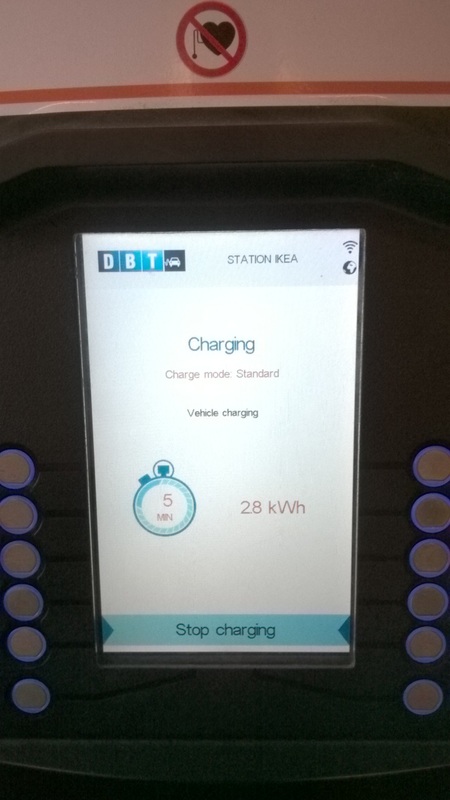
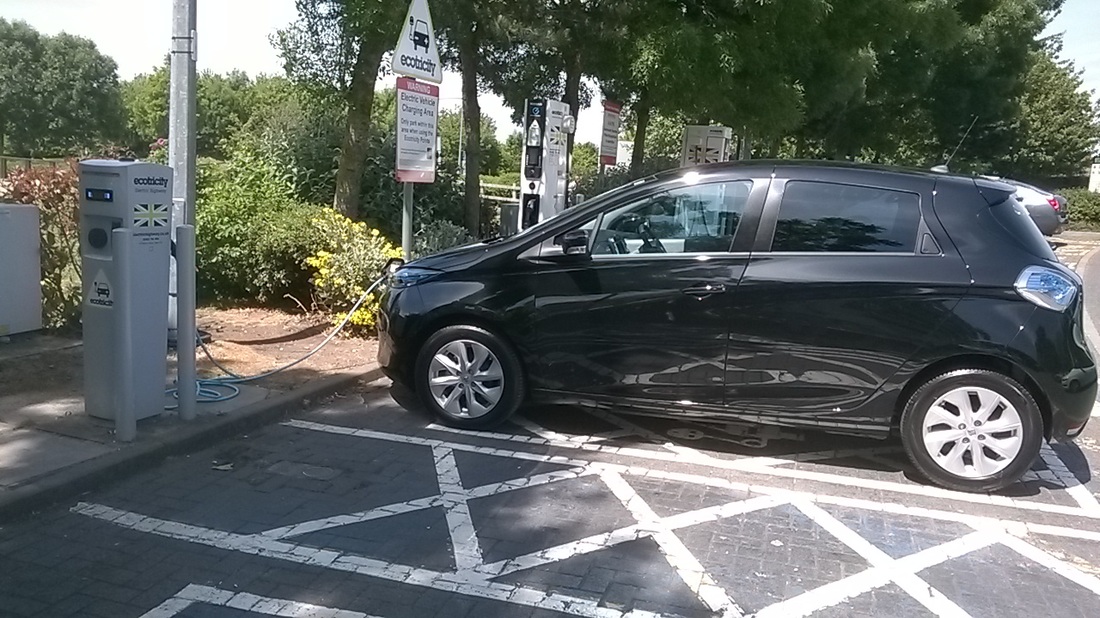
Planetary CFOs log stardate 2015-06-21  -  my trip to Ikea.  Mid-afternoon, Saturday.  Had been on a trip to Luton, and swung by Ikea Bletchley after dropping off at MK Station. 

Didn’t see any signposting to the EV charging points, but a helpful member of Ikea staff, when asked, directed me to them – two Ecotricity Electric Highway bays in a good location near the store’s pedestrian entrance.  Two leads (one each side of the pump) – one suitable for my Zoe, the other suitable for a Nissan.  The bad news - one bay free, one occupied, by ….   Er  …. You guessed it  …  another Zoe.  However, even if the other vehicle had been a Nissan, I don’t think I’d have been able to charge – as I think only one vehicle can charge at a time, and this seemed to be corroborated by another driver (see below).  So, I exited the bay and parked a few metres away in the normal parking and went off to do some shopping, noting that the pump said 20 minutes to go to charge the vehicle already on it.  Thought “I could do with an app on my phone that would either text me when the pump is free, or provide a live vid feed from a security CCTV camera so I could see when the driver came back and drove off". 

I haven’t got such an app, so about 25 mins later I came back to the car – saw the driver had left, so pulled my Zoe into the bay (just before another driver, of a large hybrid arrived).  Just got my Zoe on to charge, and the other driver backed into the second bay.  He tried to hook up (his car), but seemed to realise what I realised on my first day with the Zoe – some pumps can only charge one car at a time, despite there being more than one bay and more than one tethered cable.  So, he left his car plugged in but not charging (not sure that’s totally ethical – he would be blocking the bay for another driver).  If I finished charging and another EV driver came along before he got back, and I was also not back with my vehicle, we would between us have been potentially blocking any other drivers from charging until one of us returned.

Anyway, I sat with the car for about 20 mins, getting my battery from about 25% to 97%, and my  wife appeared after finishing our shopping.   Just as I unhooked and parked my Zoe in a normal bay nearby.  And off we went.

Overall conclusion – we’ll be visiting Ikea stores more often now.  And now I’ll be looking for apps that help us when we’re out and about and want to charge up.

0 Comments

My EV - stardate 2015-06-18

18/6/2015

2 Comments

 
Picture
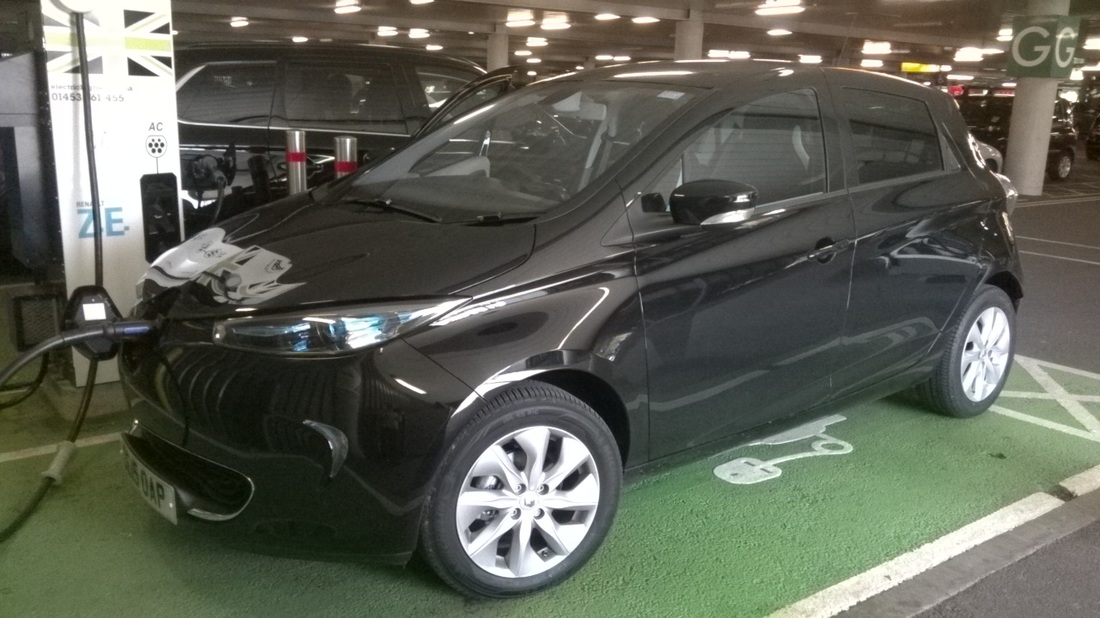
Well, it's here at last.  My Renault Zoe.  My EV.  Fantastic to drive - the most brilliant thing about it is it looks, feels and drives like a "normal" car.  Now for the travelog bit:

Planetary CFO's log.  left home on full charge.  Although my day's round trip should be well within the range without recharging, I wanted to test out some charging stations en-route.  My first stop was AVDC in Aylesbury.  Arrived about 07:40 but found that both charging points were in use by AVDC's own fleet vehicles (on slow charge - 3 pin plug).  Before I realised I couldn't charge on a point where someone was already connected (even with an apparently available type 2 socket) , I also discovered that, because of the particular location and design of the bars on a protection railing  around the charge point, it was very difficult to put my type 2 connector into the available socket.  So, a couple of things to frustrate the EV user.  Come on AVDC, you can do better than this.  I suggest you:
1) Install a private charging point (or two) for your own fleet vehicles, so that the public charging points are truly for public use, and
2) redesign and modify the charging point protection barriers.
Thank you

Next stop was Welcome Break Services, junction of M40 and A40.  Of the three charging points, it took me a little while, and some reparking, to work out that there was only one point I could use with my vehicle, but on the one bollard there were two type 2 connectors, and two car parking spaces next to it - can two EV users therefore charge on type 2 at the same time from the same bollard?  Anyway, after that, with swipe of my Ecotricity card and simple instruction on the charge point's display, I plugged my type 2 lead in at the point and on my car and hey-presto, the car and the charge point did their thing.  Took about 20 mins to charge from 75% to 97%.  I did learn that, while the car is charging, there are things you can't do, like wind down the electronic windows or run the aircon or press the start button to get either of those going.  I tried it early on and the charging stopped, so I had to go back to the beginning, disconnect as if about to drive away, then reswipe, reconnect etc.  But, overall, it worked fine, and I could at least have the radio on while charging and play with the R-link functions including satnav settings etc.  

Next stop was Seacourt Park and Ride in Oxford.  Only one EV parking space, between disabled places.  Luckily, the space was free.  I can see why there's only one space - only one charge point with a type 1 (3 pin) and a type 2 point on the same electronic 'bollard' as you might call them.  Slightly frustrating that you have to swipe your card more than once - firstly to pull up type 1 connection authorisation on the screen, then (after a while) second swipe for type 2 authorisation.  After that, plain sailing as with the previous stop.  Went to work.  When I got back, was back to full charge.

Drove home.  Plugged in at home for overnight charging from 75%, using granny cable because the home charging point being supplied free by British Gas hasn't been installed yet.  I get the impression, from dealings with them by phone, that they are very busy.  I take that as a good sign that there must be heavy demand.  The Renault dealer also said that they're now taking orders for Zoes for delivery in October, whereas mine was delivered just over a month after being ordered.  
 
Distance travelled was about 70 miles in the day. 

Overall conclusion:  Good driving.    Feels like a normal car to drive. Really enjoying it.

Worries: When there are more people like me, will the infrastructure providers lead with capacity ahead of demand, to avoid excessive probability of contention between EV drivers at the electric pumps, or will they wait for us users to have bad experiences, experience travel delays, get angry and complain bitterly before they act to catch up and install more charging points?
2 Comments

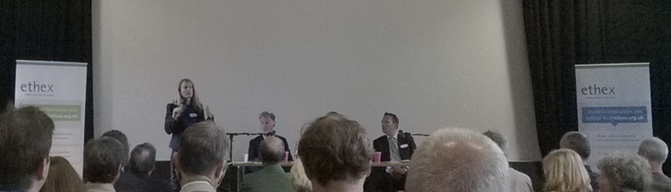
Ethex Annual Gathering 2015 - Positive Investing

9/6/2015

0 Comments

 
Picture
Some key takeaways from yesterday's event:-

Divest-invest :  Build on a growing movement. 

Lead by personal example.

Take action within the financial system, rather than eschewing it.

Avoid slactivism.
0 Comments

Andrew Critchlow criticising 'keep it in the ground' through blinkers

18/4/2015

0 Comments

 
The Planetary CFO answers Andrew Critchlow.

In his article in the Telegraph today (18th April 2015), Mr Critchlow claims that the 'keep it in the ground' campaign, which aims to persuade mankind to keep fossil fuel reserves in the ground to limit carbon emissions and keep global warming below 2 degrees, will sentence many people in developing countries to avoidable levels of poverty and deprivation.  His argument, however, is one based on taking a blinkered view of the possibilities.  His premise is that fossil fuels drive economic wealth which lifts developing countries out of poverty.

The mistake he makes is to ignore the possibilities for economic success, under a wider definition of success than wealth creation, in a scenario where fossil fuels are phased out and renewables are phased in.  This will happen eventually anyway, through fossil fuels becoming uneconomic versus renewable alternatives, in the long run.  However, even if we increasingly introduce measures, such as carbon taxation or carbon budgets (which some countries already have done), then the 'economic damage leading to longer-lasting poverty' criticism such as that espoused by Mr Critchlow doesn't hold water.

This is because there is an easy counter to his argument.  Poverty is not the result of lack of economic growth; it is the result of failure to provide a basic safety-net (providing basic human needs for security, water, food and shelter, to people - individuals or entire countries - at the bottom end of the global society).  Poverty can be easily addressed - this most heinous of indictments on the failure of humanity can be solved, by building the right kinds of safety nets in all countries and as a global standard.

There is a genuine concern about the effects of achieving a sustainable future on the total economic equilibria and the impacts of this on total wealth, health and happiness of the global population. The Rethinking Economics movement is an example of a response to this - to encourage people to question the prevailing mantra of "economic growth is the answer" or an equally puerile manta of "future generations will be richer and therefore more able to tackle climate change, so do the least we can now".    When we recognise we need to operate within ecological and other limits on a finite planet, this might well make traditional economic analyses at best questionable and at worst highly dangerous as bases for global and national policy development (eg on fossil fuels and carbon taxes). 

We might well find the answers to our global problems in a return to one of the first principle definitions of Economics as a subject:  The analysis of the allocation of scarce resources.  A greater focus on how we allocate those resources, rather than just on how we create more of them, might be a better response than to ignore planetary limits or failing to effectively challenge  the "drill, baby, drill" culture of the fossil fuel industry.
0 Comments

BBC The Big Question - moving the debate in the right direction

29/3/2015

0 Comments

 
On this morning's  "The Big Question" programme, one of the topics was climate change.  It was good to see that this sort of debate, which has for many years been about whether human-induced climate change is happening or not, has now moved on.  Even the most vociferous resister of firm and immediate action (Andrew Montfort, author of a book sceptical of the global warming "hockey stick" graph) said that climate change is happening and human activity is one of the drivers. 
The core of the debate is now what we do, when and how much we spend on it. 

Some participants in the programme advocated 'fixing and growing the economy first, so that future generations are wealthier and more able to prevent, or adapt to, climate change'

It was pointed out by others that the ecological debt we pass down might be far greater than the financial debt we currently have. 

Part of the polarisation (which naturally happens in such a debate) seemed to be about the balance between financial debt and ecological debt.  However, this failed to appreciate that it's not a case of either-or.  Especially with some of the great work being done by the likes of Cameron Hepburn at Oxford University, on breaking the links between economic growth and material throughput in the economy, many people are challenging the polarisation.  They are working tirelessly towards building a future where there is some economic growth and prosperity, and lifting the bottom segment of the global population out of poverty within a sustainable society living within one planet's ecological resources. 

As Planetary CFO, I would argue that the creation, and periodic updating, of a World Balance Sheet can capture and report on the information needed to square the circle on these various elements, enabling sensible decisions to be taken now about our resources, their deployment and the impacts of those decisions over time.  It could help us to set realistic and achievable goals on how far and how fast to redirect resources (eg away from fossil-fuel industries and into green industries).  It would help us to assess how we are doing at serving the basic needs of the global population.  I think the time has come for both extremes in the currently polarised debate to use methodical techniques such as accountancy (which are already proven, through centuries  of practice) to provide the logical frameworks for a well-reasoned and evidence-based approach to creating a sustainable future where no future generation will be any worse off than the ones currently alive.
0 Comments

Carbon, climate and crops

12/3/2015

0 Comments

 
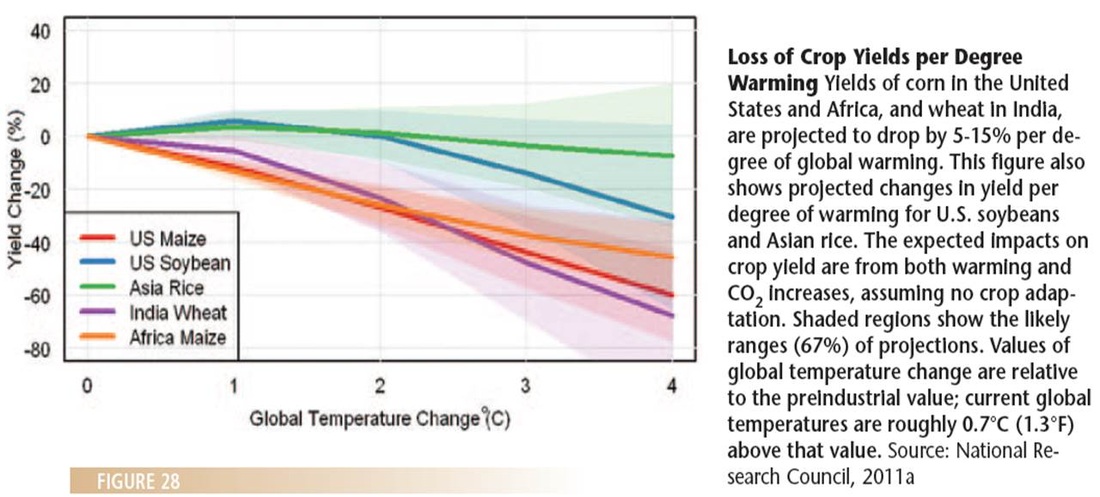
Recently, I saw a video of an MEP labelling decarbonisation in Europe as "madness" because "crops need carbon to grow".  My response is to refer to "Climate Change - evidence, impacts and choices", from which the following is an excerpt:
Picture
0 Comments
<<Previous

    About the Blogger

    I'm David Calver - an Accountant with a passion for sustainability.

    Categories

    All
    Climate Change
    Economics
    Energy
    Green Deal
    My Smallholding
    Planetary CFO
    Population And Food
    Smart Grid
    Sustainability Profession
    Transport
    Waste And Recycling

    Archives

    February 2016
    November 2015
    October 2015
    September 2015
    August 2015
    July 2015
    June 2015
    May 2015
    April 2015
    March 2015
    February 2015
    January 2015
    December 2014
    October 2014
    September 2014
    August 2014
    July 2014
    June 2014
    May 2014
    April 2014
    March 2014
    February 2014
    January 2014
    December 2013
    November 2013
    October 2013
    September 2013
    August 2013
    July 2013
    June 2013
    May 2013
    April 2013
    March 2013
    February 2013
    January 2013
    December 2012
    November 2012
    October 2012
    September 2012
    August 2012
    July 2012
    June 2012
    May 2012
    April 2012
    March 2012
    February 2012
    January 2012
    December 2011

    RSS Feed

Powered by Create your own unique website with customizable templates.